Stepping 2025 with UN Resolution on SSE. Is your country ready?
Issues such as the lack of social protection in informal majority economies;
Reflections from a recent visit to Sri Lanka
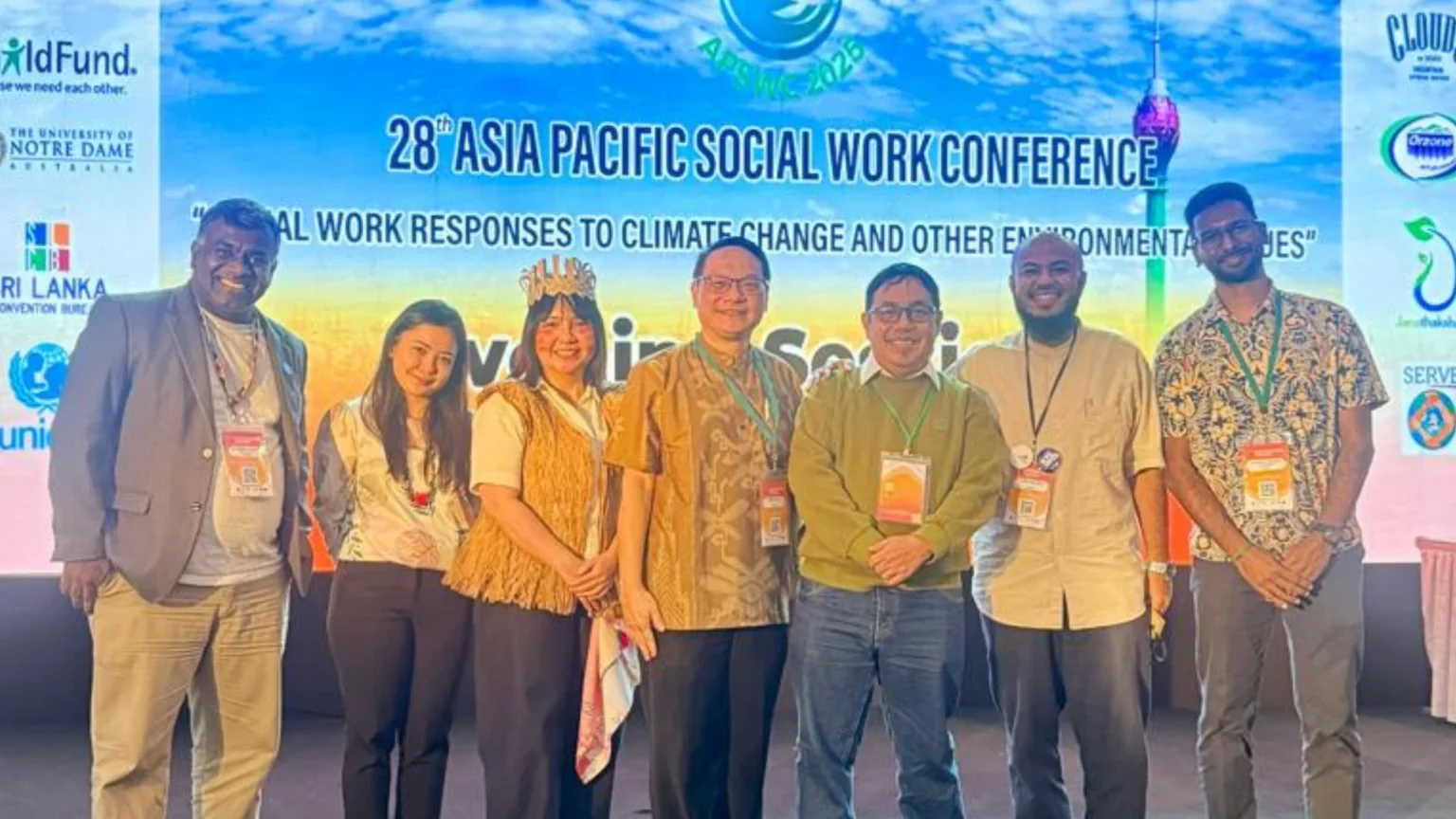
Ms Lydia Ann & Mr Paniirselvam from Malaysia were in Sri Laka for the 28th Asia Pacific Social Work Conference held in Colombo from Nov 18 to 21, 2025. They were representing the APPGM-SDG Secretariat which is an active partner of Asian Solidarity Economy Council (ASEC)
During their stay in Sri Lanka both Lydia and Panir visited a number of community based economic projects and drew some lessons from this experience.
Project visit 1: Sarvodaya Sri Lanka
The study visit starts with call to Sarvodaya Headquarters, an organisation that has been operating since 1958 in Sri Lanka. Mr. Zairak and Ms. Hiruni, from project management unit provided a warm welcome and give us presentation about Sarvodaya projects across country. Sarvodaya runs many community development projects in areas such as youth education, women’s empowerment, and disaster mitigation. The organization also collaborates with government bodies on specific projects. A key example is their MEALS program, which provides meals for students in grades 1-5; for this and their teaching modules, they partner with the National Institute of Education and the Ministry of Health.
Following this, we were given opportunity to join a field visit to meet two beneficiaries of Sarvodaya’s mushroom production training initiative, a program designed to foster sustainable livelihoods.
The first beneficiary is a single mother who transformed her prospects after completing Sarvodaya’s training program on cultivating American Oyster mushrooms. Equipped with this knowledge, she successfully established her own small-scale production in her house. This venture has become a crucial and reliable source of income, enabling her to support her family financially. Her business, although homebased, is very organised with production notes, sales notes, packaging and labelling. She also registered as business owner recently though Sarvodaya’s intervention.
The second beneficiary demonstrated remarkable entrepreneurial innovation. Starting with the same training in American Oyster mushrooms, they identified a market opportunity and pivoted to cultivating the more specialized Milky mushroom. This variety caters to a niche market, allowing the beneficiary to target higher-value supermarket. The strategic shift is reflected in the retail price, with 200g of Milky mushrooms selling for approximately 400 Sri Lankan Rupees, a premium compared to the American variety.
The visit to Sarvodaya remind us the similar program that APPGM-SDG initiated in Malaysia and we proposed to our Sri Lanka counterparts that we will conduct a online experience and knowledge sharing session from both sides benefiting community partners from both sides.
Project Visit 2: Coastal community visit in Jaffna, Sri Lanka
We travelled to Jaffna through night bus and stayed in Puttur, Jaffna for 2 days. Jaffna is in northern Sri Lanka and takes a whole night bus ride from Colombo to reach there. We received a warm welcome from the community in Puttur, Jaffna, and was introduced to deeply insightful visit to the coastal village around Point Pedro, northernmost tip of Sri Lanka.
This is a community of fishers who live facing the vast expanse of the Indian Ocean. The village bears the scars of a profound history, having been devastated by the 2004 tsunami. Yet, what defines them now is not that tragedy, but their remarkable resilience. They have rebuilt their lives and livelihoods from the ground up. There are also small islands around these areas which is similar to Malaysia’s context.
During monsoon and typhoon session, the fishers are busy with their preparedness and mitigation strategies. Generational intelligence, encompassing reading the waves, understanding weather patterns, are what they live by and we often overlook this rich generational intelligence.
Project Visit 3: Women Empowerment via tailoring for seasonal farmers communities
The final learning opportunity in Jaffna was to visit a women empowerment program through tailoring. This program has just been concluded for 3rd batch, with total participation for all 3 batches is around 18-20 participants, women from disadvantaged families, orphans and those from poor background.
The people here are farmers with seasonal crops and seasonal income, and this tailoring program enable the women in family to earn alternative income which supports the family in off farming seasons.
Pastor Suthasan who heads this initiative mentioned that every time the application is open, more than 30 will apply showing the demand for such training is high. The trainees are now working as tailors in tailoring shops around Jaffna with average monthly income of Rs1500-3,000 and in festive seasons, an average of Rs30,000.
The trainees also take their own initiative to buy tailoring machines with loans taken under government entrepreneurship loan schemes. Those who own machine can take their own orders and earn more.
Such trainings given women a huge sense of dignity and happiness which often not measured as outcome compared to the income earned. The trainees here are happy that they become a skilful entrepreneur supporting the family wellbeing.
We also explained the similar Malaysian case studies and also suggested to the organiser to explore formation of cooperative among the trainees to enable local leadership and enable small group loans such as AIM in Malaysia to support their machine purchases.
Conclusion
Sri Lanka has given us abundance of knowledge and experiences. To our great amazement is the level of resilience of ordinary people in facing many hurdles before, either man made or by nature. Such resilience is our key take away from this study trip and lessons and contacts from Sri Lanka will be our precious tressure to cherish and protect.
source : asec.com.my
More information and perspectives on this subject
Issues such as the lack of social protection in informal majority economies;
A message for the launch event of Citizen Action for the Normalization of Seoul City Government
Decoding the Differences Between Social and Solidarity Economy (Sse), Social Entrepreneurship, and Related Initiatives